


Market Square Arena was home to the Indiana Pacers, but stand-alone events in its history include Andre the Giant taking the title from Hulk Hogan, two shows on Michael Jackson’s Bad tour, stops on Jimmy Swaggart and Billy Graham crusades, the filming of Mötley Crüe’s “Wild Side” video with Tommy Lee drumming upside down in his cage, and Elvis’ final performance, which my parents attended. Mom said The King was fat, as legend loves it, but in photos from the night he looks fine, just chubby.
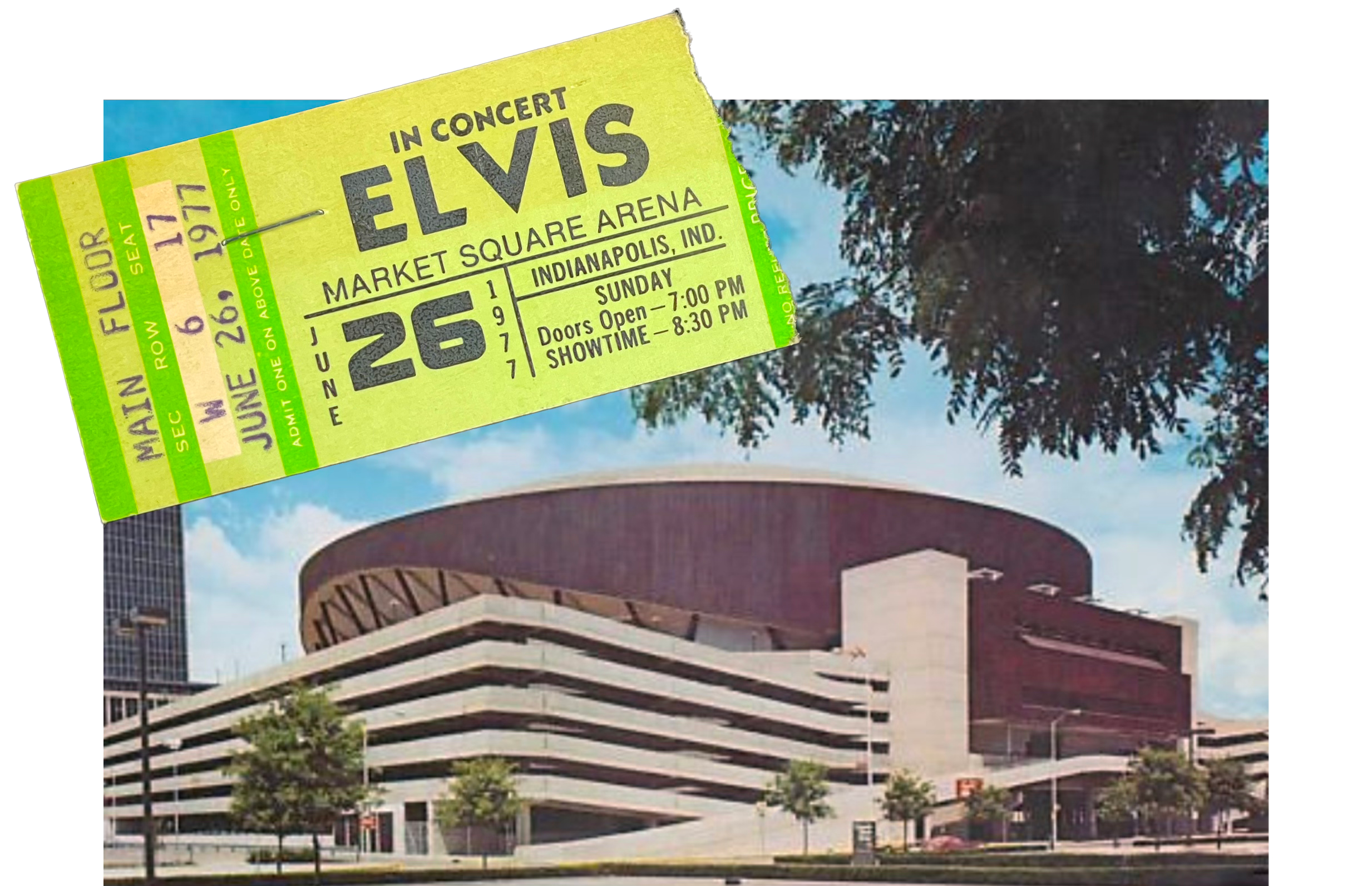
The arena was completed in 1974, same year as me, designed in the Diet Brutalist style by architecture students at Ball State University in Muncie, Indiana, where I was born. The building’s long gone now, imploded in 2001 just before the twin towers came down.
I didn’t go to concerts often growing up, and exceptions were isolated to the sanctuary at church and a Christian festival called Creation where my big sisters were thrilled to see Amy Grant, Michael W. Smith, and DeGarmo & Key in 1984. Al Green was there too, but I don’t think my family cared. I mostly hung out in the kids’ tent watching Bible skits and singing along to songs played by people in animal costumes.
When punk rock hit me in the head and I started going to underground shows, a venue for 200 people was huge. Bands played basements or community centers for tiny crowds, and my crew and I liked it that way.
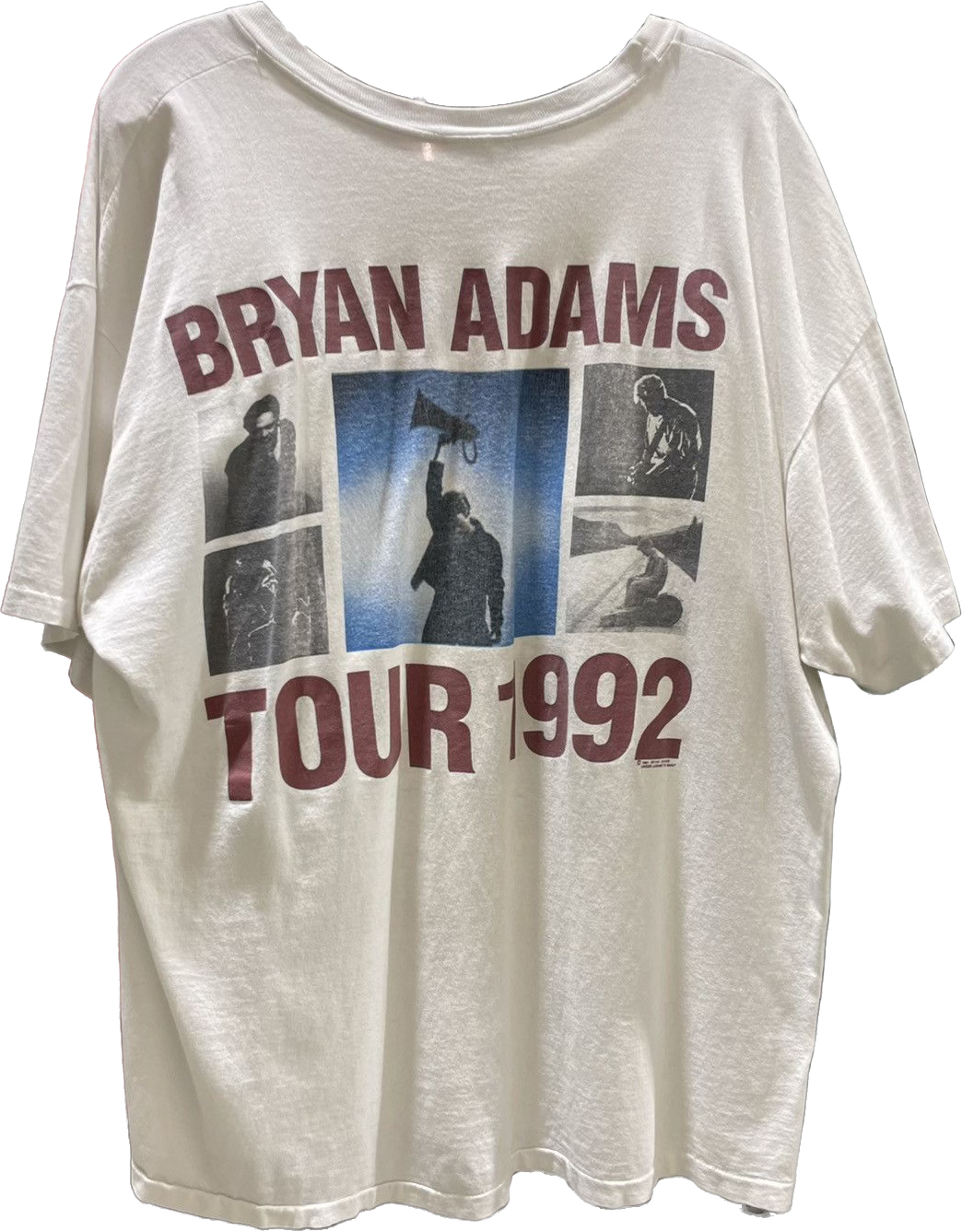
I saw my first arena show in 1992, when a friend’s mom was the ninth caller to the radio station and won tickets to Bryan Adams at Market Square. She passed them to us thinking we’d be hyped, but we only went for a laugh.
We clowned the pop rock normies and nascant minivan moms among us while The Storm, a short-lived group featuring ex-members of Journey and AOR, warmed up the stage. When Bryan Adams came on, we crossed our arms and snickered through the first few songs, but when he played “It’s Only Love,” the first bona fide hit of the night, a unifying force spread through the crowd, impossible to ignore. When he did “Run to You” and “Somebody,” my buddy and I were startled to find ourselves out of our seats and on our feet. His assault on our armor continued with big-gun ballads “Heaven” and “Everything I Do (I Do it For You)” coming back-to-back. By the time he played “Cuts Like A Knife,” goddamnit, we were belting out the NaNaNas with ten thousand of our newest friends.
“Summer of ‘69” came in the encore. The lights in the arena went down for anticipation to rise. The opening riff—instantly recognizable, eternal—was teased for a single measure, its reverb tail echoed in the dark, and every head was screaming. The blackout ended when a spotlight cut a silhouette of Adams and his six-string on a riser at the back of the stage, and I understood the cunning tricks of concert production for the first time. When the riff returned and Bryan sang the immortal opening lines, my guy from school and I added the night to the best days of our lives.
I saw my second arena show twelve years later when my client Hella opened for System of a Down and The Mars Volta in Seattle in 2005. Hella was the weirdest band I booked; the least likely to play a venue that size. Their set started just after doors opened, an unfair but common plight of artists playing first of three in the big leagues. Hella spazzed out for mostly empty seats, the scanty early-arrivals bemused. It’s not like The Mars Volta and System were playing it straight, but Hella’s post-art-rock noise was a step too far.
Like many artists I got into around the time, it was my friend David Dickenson from Suicide Squeeze Records who first played Sacramento’s Hella for me. He would eventually put out an EP and album from the band, but Olympia’s 5RC, sister label to Kill Rock Stars, had recently released their debut, a beguiling stake in the ground called Hold Your Horse Is. I saw Hella play live for the first time at Cafe Du Nord in San Francisco, along with David and 5RC/KRS honcho Slim Moon. The shit they did on stage that night was like nothing I’d seen.
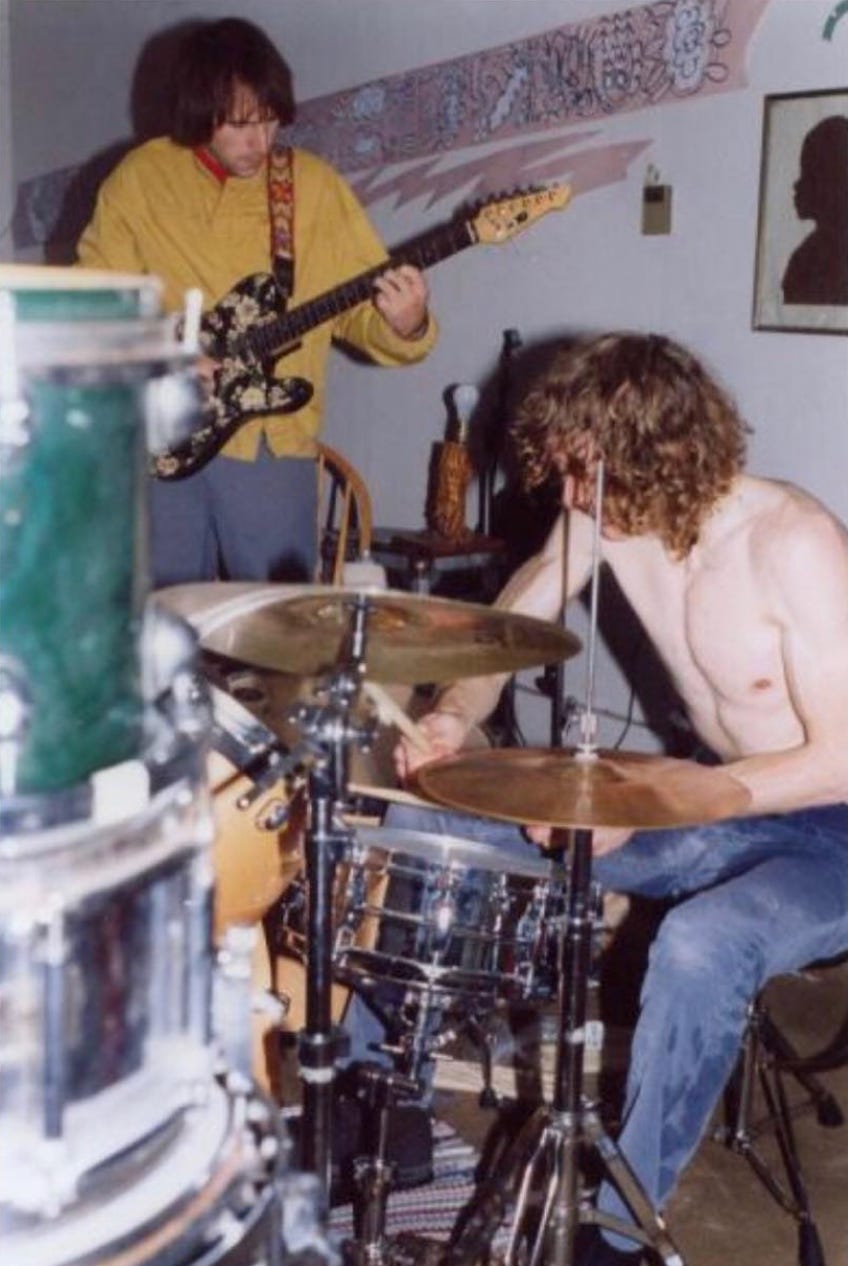
The duo’s experimental, instrumental racket, orchestrated by guitarist Spencer Seim and drummer Zach Hill, was removed from much of what I listened to, but a handful of forebears appeared in my record collection like U.S. Maple, Don Caballero, Drive Like Jehu, and Polvo. Now I know the roots go deeper, but I was not versed in Mr. Bungle and Primus at the time, nor the more classic lineage; stuff like Zappa, Beefheart, and outsider jazz. But references only go so far. Hella was singular and paved their own lane.
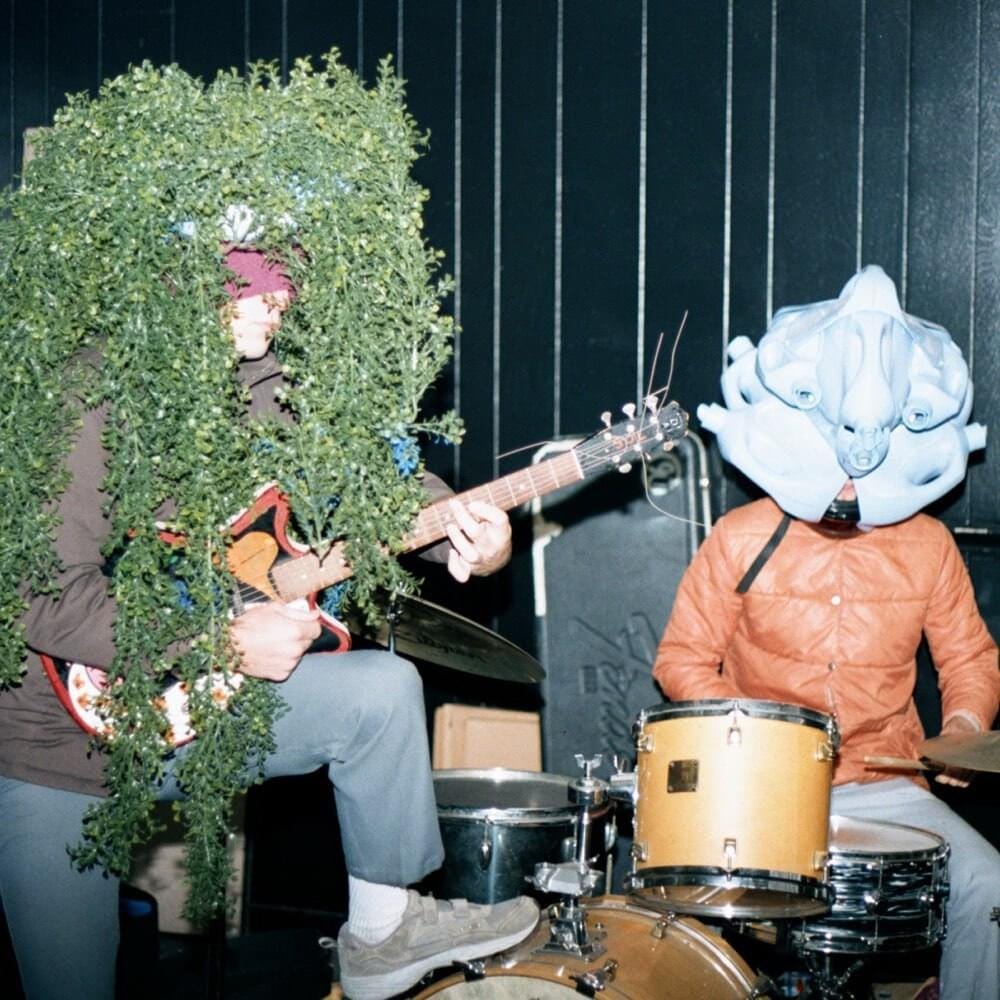
Another duo, Lightning Bolt, were kings of the Rhode Island warehouse scene, and it was easy to see Hella as the California counterpart. Lightning Bolt lore, backed up by grainy video in a documentary, said the mayhem of their shows caused spontaneous make-outs among their fans. Hella shows were not sexualized, but I often saw people laughing while they played, but not because the band was funny. Their hard-to-solve equation of time signatures and changes, the preternatural tapping of Spencer’s guitar, and the athleticism of Zach’s hectic drumming are legitimately confounding. Trying to dance to a momentarily sensical riff or fleeting rhythm only made one look silly. And so fans laughed.
And I guess… okay fine, Spencer was funny. His pulled faces and herky jerky head, his haircuts and his clothes; all necessary foils to Zach’s dead-seriousness. After a few songs, the drummer’s snare was streaked and splattered red as his fingers gathered cuts and bled.
Hella’s album and song titles were absurd and humorous, too. Here’s a partial list:
Total Bugs Bunny on Wild Bass
Bitches Ain’t Shit but Good People
“Been a Long Time Cousin”
“Post-Ivy Leave Depression”
“Welcome to the Jungle Baby, You’re Gonna Live”
“We Was Just Boys, Living in a Dead German Shepard”
“Mind Over Butter”
“Kid Life Crisis”
“The Ungrateful Dead”
“Anarchists Just Wanna Have Fun”
When I met them, Hella was self-booking gigs, playing warehouses and DIY spaces. After they hired me, some kids throwing shows took little interest in, if not full offense at, dealing with a professional agent, though I only barely qualified. But the band warmed up to (and grew into) traditional venues. Hella toured relentlessly, converting more fans with bonkers shows and attaining the coveted status of a band’s band, eventually getting invites to play big gigs with some of their heroes.
By the time they got the offer from System of a Down tour, Hella had fleshed out their live configuration to a 5-piece. I went to the show at Key Arena in Seattle with David from Suicide Squeeze, who had recently released Hella’s new album, an OutKast-esque double LP, one by Zach and one by Spencer, each made independently. As mentioned, I’m not sure they went over, but they had fun with the fantasy. I booked a lot of arena shows eventually, but Hella as the first gave me much pleasure.
After they played and The Mars Volta did their thing (also bewildering many in attendance), Zach took us up to the 300 section, the last row of seats at the back of the building. “You gotta see this,” he said. By now every seat was full. System came on and opened with a one-minute acoustic snippet from “Soldier Slide,” then played “B.Y.O.B.”
Blast off, it’s party time / And we don’t live in a fascist nation / Blast off, it’s party time / And where the fuck are you? / Where the fuck are you?
The fans were right there with the band, that’s where the fuck they were. It was as though they’d rehearsed synchronized devil horns and headbanging with System in advance. The panorama from the top of the arena was arresting. The steep grade of the upper deck, combined with the lights, the sound, and the raging, was disorienting. I worried I might tumble down over the metalheads, which seemed bad. Lyrics aside, the vibe was closer to a bad-guy political rally than my innocent night with Bryan Adams as a teen.

SIDE PROJECTS:
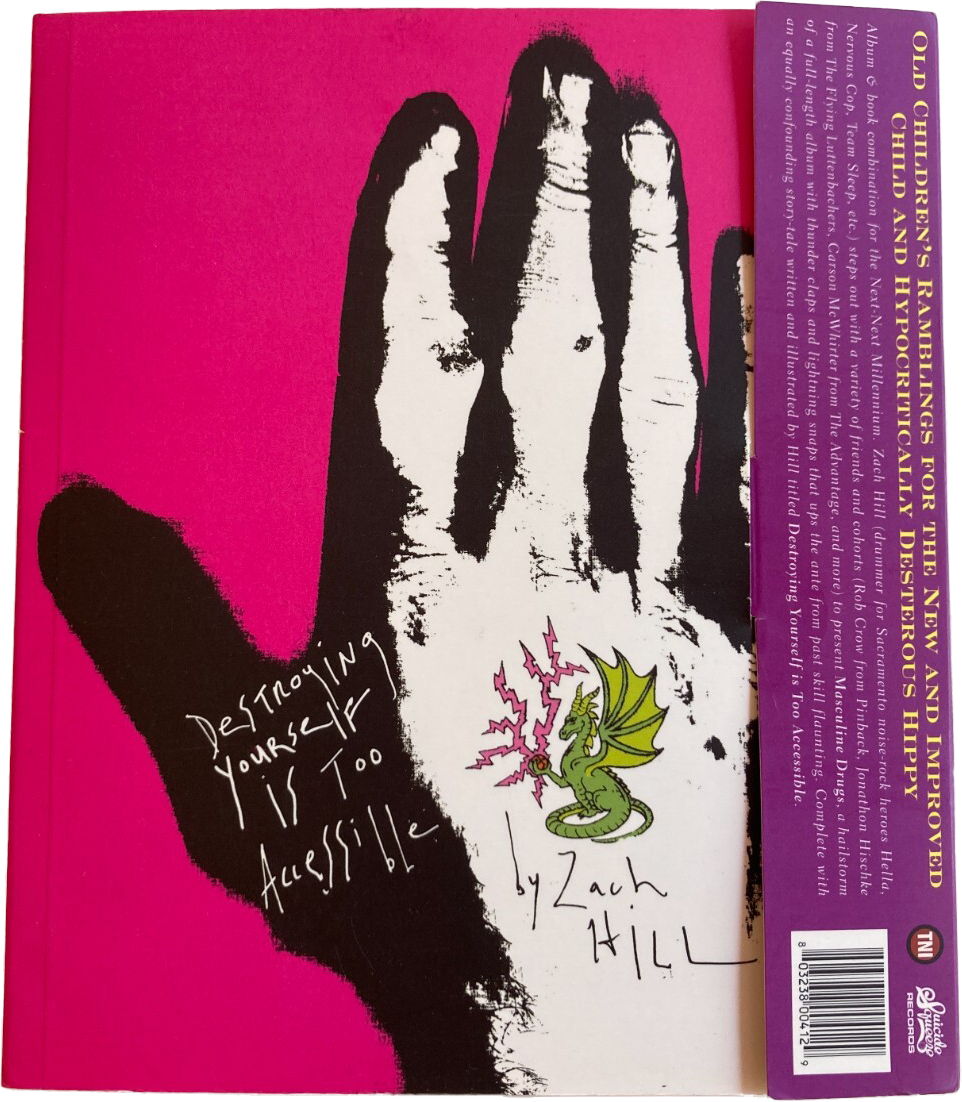
While booking Hella, I was also publishing underground books, and those worlds overlapped now and then. Teaming up with David and Suicide Squeeze, we co-published an inscrutable book written and illustrated by Zach Hill called Destroying Yourself is Too Accessible. It came packaged with an album called Masculine Drugs from his side-project Holy Smokes. It’s very rare.
As for Spencer’s life outside Hella, I briefly booked his band The Advantage (Ex-Artists 022). They played covers of songs from classic 8-bit Nintendo games. There are a few records and EPs out there to enjoy, and they are a blast.
Ah, shit, thanks for the reminder about the Advantage. I loved those songs (and I don't even play video games). So damn good.
Sorry, my copy of "Destroying Yourself is Too Accessible" is worth HOW much? Damn.