

No, books should not be free
The Walk Book micro-distro, transmission #2

listen above, lightly edited transcript ⬇
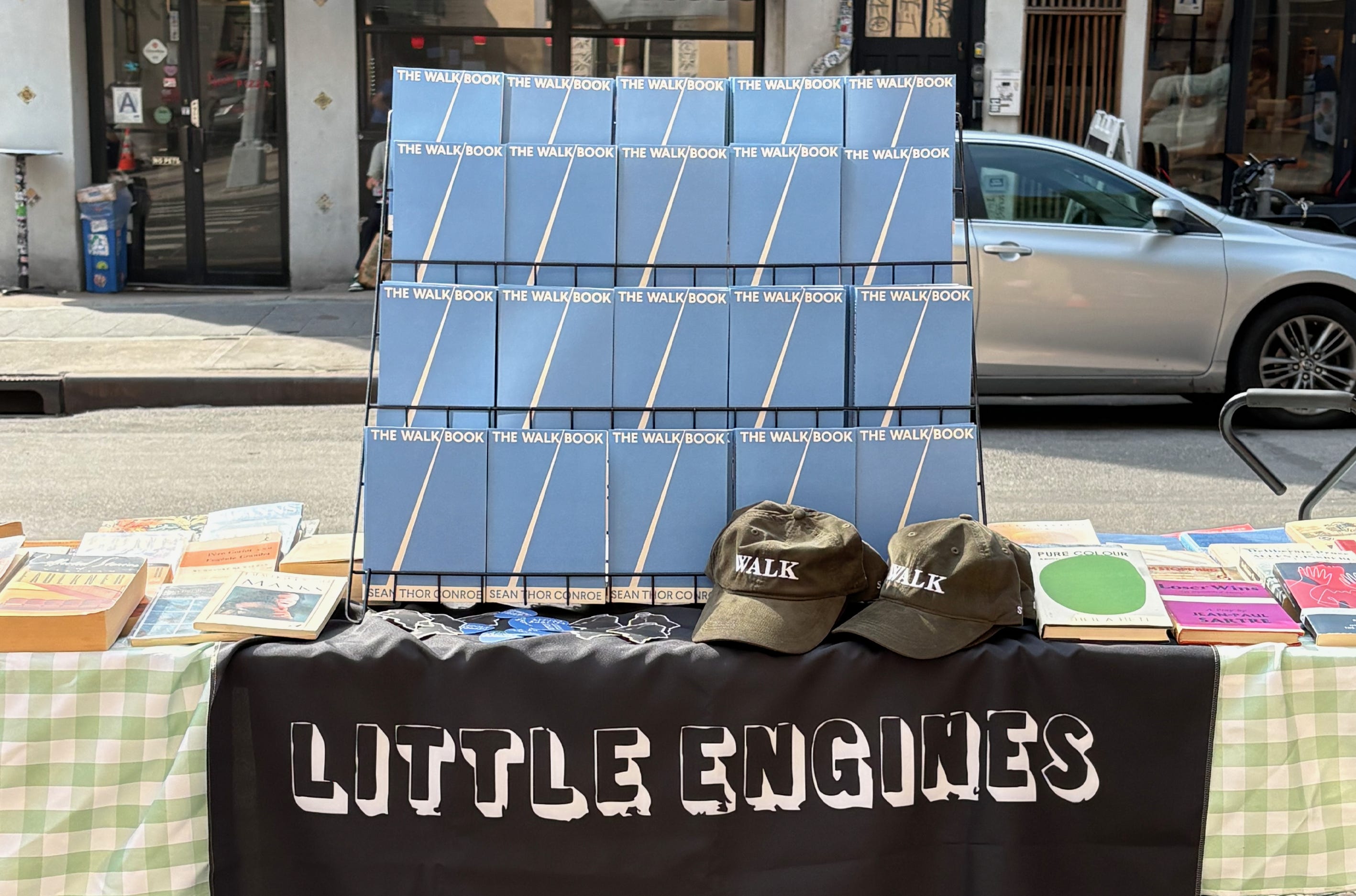
Yo. It’s Friday, almost noon. I’m in my hotel room in New York and decompressing a bit after a long drive day, and then yesterday, another halfway long drive, and then hooked up with Sean and our guy Tom out at Peter Books in Williamsburg. Tom’s got this great used book stand on North 5th & Bedford, where he’s got an incredible rotating selection of used books that he goes out and finds and then brings to his table. And he does this little Instagram series called Lit Chats with writers. It’s really cool and picking up a lot of steam and has become, I think, God it’s like the underground lit scene’s version of that trackstar dude with musicians, I think. But yeah, when the idea for The Walk Book being free was coming together, I imagined his stand with a bunch of Walk books for people to come grab, and last night vision came true. We set up a bunch of books on his rack out there and had some Sean fans come through and get a copy and then indoctrinated some new people… some new readers to Sean’s stuff by giving them a book. And it was good to hang out there, a great and beautiful night in Brooklyn. And I’m just thinking about: Why is The Walk Book free? The idea was to publish a book without doing business. I was thinking: How do I do this? How do I do a book without any invoices. Without having to have a, you know… yeah, no invoices. No accounting. And when I knew I wanted to do a free book, and when Sean agreed to do it, when I pitched it to Sean and he was into it, we started to try to write down some stuff. Like on his side, he was writing what the book is. And on my side, I was writing about why it’s free. And we thought we would maybe use that as a press release or some kind of one sheet for the book, but then we decided not to use that stuff. And decided to do no press, basically. And not… yeah, and which felt in line with the project, you know, but as we were kind of writing this stuff and thinking about potential marketing or promo, I was talking to an ex-music client who was in the throes of an album launch. And the promo campaign for putting out an album is this punishing time zone hopping, repetition machine. And coupled with our most modern demands for perpetual content creation and relentless posting, unflinching focus on numbers… numbers of streams, likes, tickets, sold, tickets unsold, and dollars, dollars, dollars… that cycle will often conclude with promise and possibility muted by like disillusion and exhaustion before the record even drops. This was sort of a… you know, I’d experience this a lot with artists. And this particular artist has made a bunch of records. He’s done this many times and then he pinpointed a commonality this go around. And he said to me, “The worst times of my life are when I have an album coming out.” And he, you know, he’s being a little bit… yeah, I don’t think that’s totally honest. Or actually, maybe it’s super honest. But maybe it’s a little strong, saying it’s the worst times of my life, but I think it maybe you could rephrase it and say, like, the least cool feeling is when I’m putting an album out, or the least true vibes of making music is when an album’s coming out. And it’s easy to relate on the business side as well. And so when I was shifting my full attention to literature stuff, to literary stuff, my own writing, the magazine, publishing again, I reflexively built another roster. And this time it was with writers rather than bands to publish in the magazine. And I started hearing the same tenor in writers that I heard from musicians. And then I smelled the threat of my own disappointment and my own burnout in the air pretty quickly. And then when I decided to go beyond the magazine and to publish books, the question was: How to move? How to not end up in the same spot that I did with music? And so to sidestep the landmines this time, I came up with this equation. This has been an equation in my mind. It’s: publisher + patron ≠ vendor. And I was like, I won’t sell books. I’ll just make them and hand them out to readers. And I was like: Well, who will do that with me? What writer’s gonna move with me that way? And so I was like: Well, I’ll just do my book that way. I’ll do my novel that way. Um, which… I am going to do my novel that way soon. I’ll start, I think in a few weeks here, start talking about that book. Once The Walk Book has moved through its little cycle here. But anyway. So I was getting ready for mine and thinking about it. And then I was listening to Sean’s 1storypod, which I always do, Sean and Harold, and something came up about The Walk Book which I’ve been hearing about for years, you know, forever… this book that exists as a manuscript but not as a book. And I was like: I wonder if this would be something to pitch him. And Sean’s agent, Julie Flanagan, she’s an ex-colleague at CAA where I was working before I quit, and we became friendly on my way out the door. After COVID, when I was working at these agencies that had literary departments, I was trying to meet some people that did cool stuff in those departments outside of music, and I met Julie. And she gave me a copy of Fuccboi, which I had probably sort of heard of, but I didn’t know much about Sean or the book. I mean, I knew almost nothing about Sean or the book. I had missed all the bullshit around that book’s release. So I read it, loved it, read it again, loved it again. And then I became a devotee of the podcast. And, um… and this elusive prequel, The Walk Book. I read the excerpt in The Paris Review, but I wanted the full story, just selfishly. I wanted the full book for myself. And then I started thinking: I wonder if he might be down for this experiment. So I hit Sean up. I was like: Hey, can we get together? I wanna pitch an idea to you. And when I told him about it, he was beaming, he was into it. Yeah, so like when I think about my ex-client, a guy launching his album, I just wonder, like, what if he was doing it on the street corner? Like handing it out for free on CD-R instead of talking about it on Instagram or whatever. And I can imagine him smiling doing that. Of course, The Walk Book is no CD-R. The book is like written, edited, designed, and printed with the highest quality, high concern, heaps of love, so it’s not, you know… it’s not a throwaway. It’s a real fucking thing. Although we were on the street corner handing it out last night. And I think it’s just been a total… the vision was the vision, the results were a question mark, but of course I would let myself think a little bit about what would be a huge success. And this, you know, we’re still here, we’re here this weekend, doing it in person. We did it on Monday all online. Now we’re doing it in person and it all feels good. Like this was what it could have and should have been. But it is… I don’t think all books should be free. You know I realized it could be… you could look at this and say that it’s devaluing books and some publishers or people might be like: That’s fucked up, you know, they shouldn’t be doing that. That’s like when Napster came along or whatever, or Spotify, you’re just devaluing and giving people the expectation that things should be free, that books should be free. But to that, I say: Hush. Because no one’s looking at this. This is the tiniest sliver of a sliver of the world, the literary world, watching and seeing this. This is just a... This is a small little move in time, trying to do something a little different that feels a little different. And yeah, books should not be free. I don’t… you know, they shouldn’t be free. But this one should be, at least for now. I don’t expect you out there to, if you’re a publisher, to do free books. And if you’re a book buyer, book reader, I don’t think you should be getting your shit for free all the time, but you can have this one.
I hope this book walks into unexpected places, does unexpected things. It's already doing that. Keep walking it out...
i have such a deep admiration for the spirit of all this and for this vision of what moving to literature can look like after being in the music industry. really looking forward to reading the walk book.